

Preliminary Estimating Services That Guide Early Decisions

Decide Smartly with Early Numbers
Before a project is fully designed, before drawings are complete, and before a contractor is appointed, someone needs to answer the most fundamental question in construction: What is this going to cost? Preliminary estimating is the process of developing reliable cost assessments at the early stages of a project, when detailed information is limited but financial decisions cannot wait.
The FEDES estimating company provides preliminary estimating services that give contractors, developers, and project owners a realistic cost picture before design is finalized. We work from whatever information is available, such as schematic drawings, design briefs, square footage targets, or conceptual sketches, and translate that into structured, defensible budget figures that support better decisions at every stage of project development.
Whether you need a feasibility-level number to evaluate a land acquisition, a conceptual budget to present to a lender, or an early estimate to keep a design within financial boundaries, we deliver the clarity you need, without waiting for a full drawing set.

Why Getting Early Estimates Right Actually Matters

Bad Early Numbers Create Expensive Late Problems
A preliminary estimate that is too optimistic sets the wrong expectations for clients, lenders, and project teams. By the time detailed pricing reveals the gap, design is locked in, and changes are costly. We prepare early-stage estimates that are grounded in real construction costs, not best-case assumptions, so your project starts on a financially honest foundation.

Useful at Every Stage Before Construction
Preliminary estimates are not just for the earliest concept stage. They remain valuable through schematic design, design development, and pre-tender phases, evolving as the project definition improves. We provide estimates at whatever stage of early design you are currently at, and update them as your drawings develop toward a full construction set.

Built for Canadian Construction Costs
Construction costs vary significantly across Canada; what a project costs in Toronto is not what it costs in Calgary or Vancouver. Our preliminary estimates are aligned with current Canadian market pricing by region, sector, and project type, giving you budget figures that reflect where and what you are actually building.
What We are Offering in Our Preliminary Estimating Services
Get StartedTools We Use for Accurate Preliminary Estimates
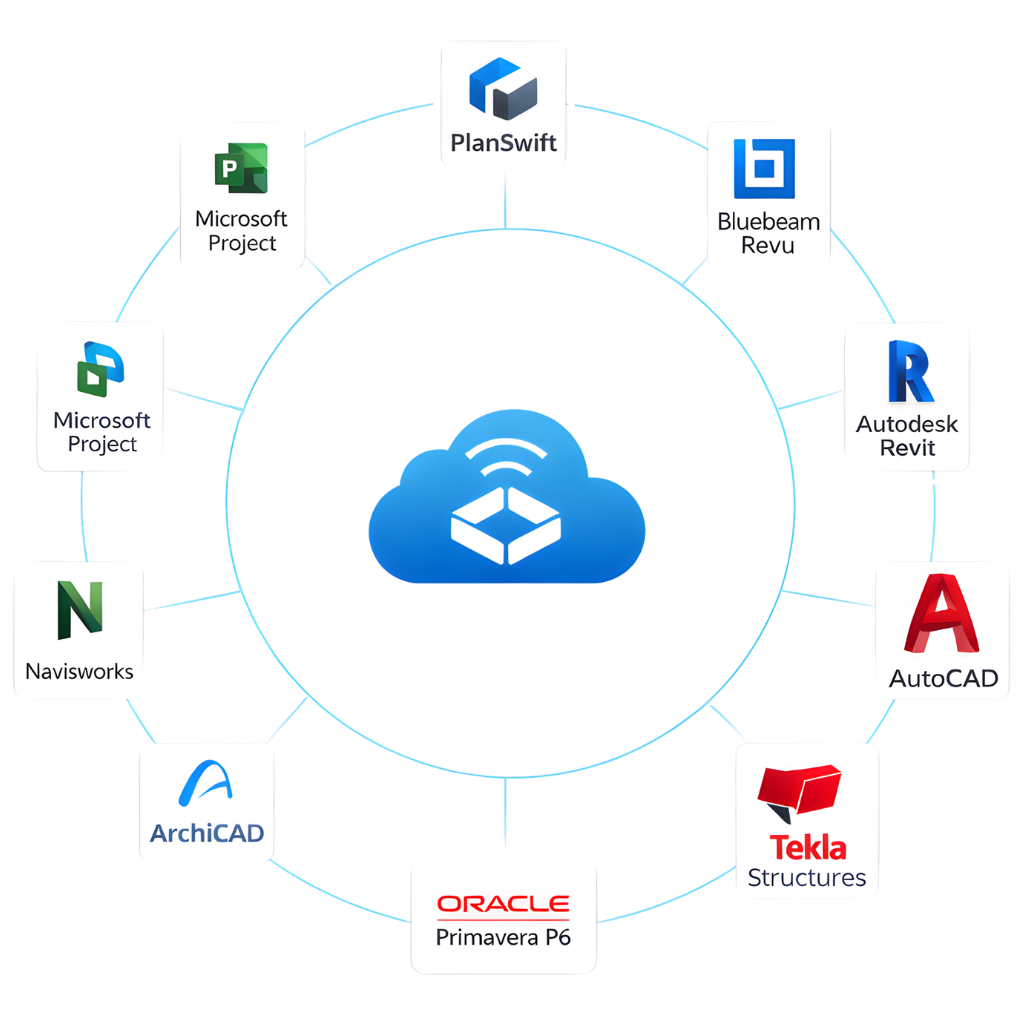
We combine industry-standard estimating platforms with current Canadian cost data to develop preliminary estimates that are structured, traceable, and easily updated as the design progresses.
- PlanSwift
- Bluebeam Revu
- Microsoft Excel
- Autodesk Revit
- RSMeans Cost Data
- Procore
- CostX
- On-Screen Takeoff (OST)
- Microsoft Project
- Power BI
Who Relies on FEDES Estimating Company
Early-stage cost clarity benefits every professional involved in a project before construction begins.
Developers & Investors
We help developers assess project viability, structure development budgets, and present credible cost plans to financing partners before committing to full design expenditure.
Project Owners
Owners use our preliminary estimates to set realistic budgets, align expectations with their design team, and avoid the costly surprises that come from discovering budget gaps late in the process.
Architects & Designers
We give design teams a live cost picture as their design evolves, helping them make informed decisions about materials, systems, and scope before the project reaches the documentation stage.
General Contractors
GCs involved in early contractor engagement or design-build projects use our preliminary estimates to assess project feasibility, structure internal budgets, and support client cost discussions.
Lenders & Financial Institutions
We prepare preliminary estimates formatted specifically for financing review, giving lenders the structured cost documentation they need to assess project risk and approve construction funding.
From Brief to Budget in 4 Simple Steps
Early-stage cost clarity, delivered without the wait.
Submit Plans
Upload drawings & documents
Review Scope
Analyse drawings & requirements
Cost Estimate
Trade-wise pricing at market rates
Bid-Ready Delivery
Accurate estimates in 24-48 hrs, ready for confident submission
 Built for better bids
Numbers You Can Build Your Next Bid On
Behind every accurate takeoff is a team that understands drawings, scope, deadlines, and the pressure to win. Our estimators bring practical construction knowledge to every project so your numbers are clear, complete, and ready to use.
What Our Customers Say
Our Latest Construction Blogs & Articles
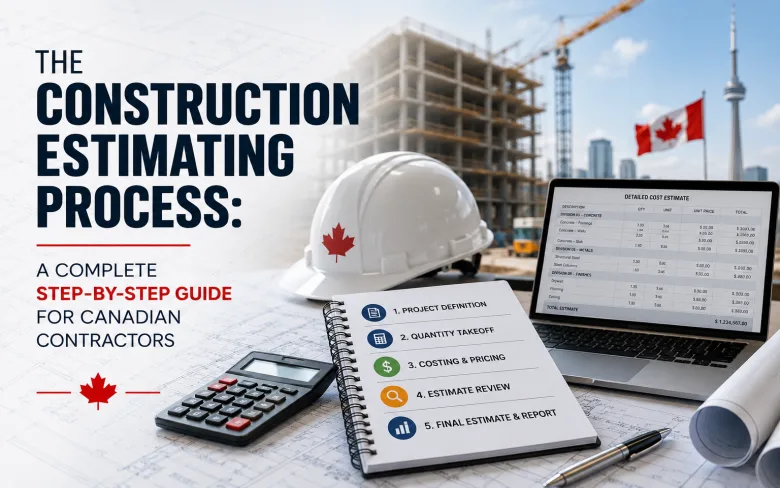
The Construction Estimating Process: A Complete Step-by-Step Guide for Canadian Contractors
Construction estimating is not a single task; it is a structured process. From the moment you receive project drawings to the moment you submit a bid, every step has a defined purpose.
Learn More
In-House vs Outsourced Construction Estimating - A Detailed Guide
In-house or outsourced construction estimating? Compare real costs, pros, cons & when each model wins. The advanced guide for contractors who want to bid smarter.
Learn More
The Real Cost of Hiring a Full-Time Construction Estimator in 2026
A full-time estimator costs far more than the salary. Discover the true 2026 cost — benefits, software, idle capacity & when outsourcing beats hiring full-time.
Learn More
Why Contractors Lose Money on Projects
Learn the real reasons contractors lose money on projects, bad estimates, scope creep, labor overruns & more. Fix them before they cost you.
Learn More
How to Calculate Material Takeoffs from Blueprints
Learn how to calculate material takeoffs from blueprints step by step with trade formulas, waste factors & pro tips for accurate estimates.
Learn MoreFrequently Asked Questions
A preliminary estimate is a cost assessment prepared before detailed drawings are complete. It gives project stakeholders a realistic budget picture at the early stages of development based on available design information, project type, size, and location. Preliminary estimates are used for feasibility decisions, design alignment, financing applications, and pre-tender benchmarking.
Accuracy depends on the stage and quality of information available. Early feasibility estimates typically span a broader cost range, while design development estimates become progressively more precise as drawings are developed. We are transparent about the confidence level of every estimate we produce and build in appropriate contingencies to reflect the design stage.
We work with whatever is available, like a project brief, a site plan, a schematic floor plan, or a written description of the intended scope. The more information provided, the more refined the estimate. We will tell you clearly what we need and what we can produce from what you have.
Yes. Preliminary estimating is most valuable as an ongoing process, not a one-time exercise. We update and refine cost plans at each design stage, from concept through to pre-tender, so your budget stays current and relevant as decisions are made.
Yes. We include design and construction contingencies appropriate to the stage of the project. Early-stage estimates carry higher contingency allowances to reflect greater uncertainty, which are progressively reduced as design is resolved and scope is confirmed.
Yes. We handle early-stage estimates for renovation, retrofit, tenant improvement, and adaptive reuse projects. These estimates account for the additional uncertainty of working with existing conditions and include appropriate risk allowances for hidden scope items.
Most preliminary estimates are delivered within 24 to 48 hours for standard projects. More complex or multi-building developments may require additional time, which we confirm before beginning work.
Yes. We prepare estimates in a professionally formatted, trade-wise structure that meets the documentation requirements of most lenders and financial institutions. If you have a specific format required by your lender, share it with us, and we will align our deliverables accordingly.
A preliminary estimate is developed from incomplete or early-stage design information and provides a cost range or budget-level figure. A detailed estimate is prepared from complete drawings and specifications and provides a precise, line-item cost breakdown suitable for bid submission. Both serve different purposes at different stages of the project lifecycle.
Reach out through our contact page and share your project details, including stage, type, size, and location. We will review what you have, confirm what we can deliver, and get your early-stage budget in place so your project can move forward on solid financial ground.
Ready To Win More
Bids And Save Time?
FEDES provides fast, precise, and affordable construction estimating services tailored to your project needs. Get your quote today!
Book Your Appointment
We will get back in less than 24 hours.